
Winning consistently in today’s competitive multiplayer landscape requires more than fast reflexes—it demands a deep understanding of early vs late game strategy and how each phase shapes the outcome of a match. Many players struggle to transition smoothly from early momentum to late-game dominance, often losing winnable games due to poor rotations, inefficient builds, or misreading the evolving meta.
This article breaks down exactly how to approach each stage of play, from optimizing your early resource control and lane pressure to executing decisive late-game team fights and objective plays. We analyze current competitive trends, proven gameplay techniques, and high-level arena strategies that top players rely on to stay ahead.
Our insights are grounded in extensive meta analysis, hands-on gameplay testing, and close observation of competitive matches, ensuring the strategies shared here are practical, up-to-date, and effective. Whether you’re climbing ranked ladders or refining tournament-level tactics, you’ll find clear, actionable guidance to sharpen your edge.
The Early Game: Building Your Foundation (First 1–10 Minutes)
Primary Goal: Resource Accumulation & Information Gathering. The early game isn’t about flashy plays or highlight reels. It’s about building the engine that powers everything later. Think of it like the opening moves in chess: you’re not checkmating on turn three (unless your opponent blunders spectacularly), you’re developing position.
Some players argue that hyper-aggression wins matches early. “Snowball or bust,” they say. And yes, early kills can tilt momentum. But without a resource foundation, that early lead evaporates fast. Gold, experience, materials—these are your compounding assets. Miss them, and you’re quietly falling behind.
Efficient Farming & Resource Management
Efficient farming means maximizing every second. In MOBAs, last-hitting (delivering the final blow to minions for gold) is non-negotiable. In RTS games, an optimal build order (a pre-planned sequence of unit and structure production) ensures no idle workers and no wasted resources. Even a five-second delay in early production can ripple into a weaker mid-game army.
Pro tip: Track your average resource-per-minute and aim to improve it incrementally. Small gains stack faster than you think.
Information Warfare & Vision Control
Next, information. Warding, scouting, and tracking enemy cooldowns reduce uncertainty. Vision control (placing tools that reveal hidden areas) turns the map from a mystery into a blueprint. An unseen threat is the most dangerous one. Conversely, a seen threat is manageable—even predictable.
Some players dismiss vision as “support work.” That’s shortsighted. Knowledge of enemy rotations lets you farm safely and set traps. It’s the backbone of smart early vs late game strategy.
Low-Risk Aggression
Finally, controlled pressure. Poke. Harass. Trade efficiently. The goal isn’t to dive under tower at level two like you’re starring in an action movie. It’s to chip away—force recalls, burn potions, deny farm.
And if you’re drafting? Smart matchups matter. Review proven counter picking strategies to gain a competitive edge to stack advantages before the match even starts.
In short, the early game rewards patience, precision, and preparation—not panic.
I still remember a ranked match where I was three kills up at ten minutes, feeling unstoppable—until the game flipped. That was the moment I truly understood the mid-game transition.
The tipping point usually arrives when core items (your character’s essential power spikes) are completed or when ultimate abilities unlock. In other words, the lane skirmishes stop being isolated duels and start deciding the map. This is where early vs late game strategy thinking has to evolve.
If you’re ahead, resist the urge to keep chasing eliminations (I’ve thrown leads that way). Instead, consolidate. Take minor objectives like outer towers or neutral camps. These objectives generate gold and vision control—vision meaning information about enemy movement. By denying farm and shrinking safe zones, you turn a gold lead into map pressure. Pro tip: rotate immediately after a win, don’t reset unless necessary.
On the other hand, playing from behind demands patience. I’ve learned to trade space for time—giving up a tower to defend high ground and secure safer farm. Defensive positioning reduces pickoffs, and waiting for the enemy to overextend creates comeback windows. Look for mistakes; don’t force hero plays.
Mid-game isn’t about greed. It’s about pressure—and knowing when to apply or absorb it.
The Late Game: Executing the Endgame (25+ Minutes)
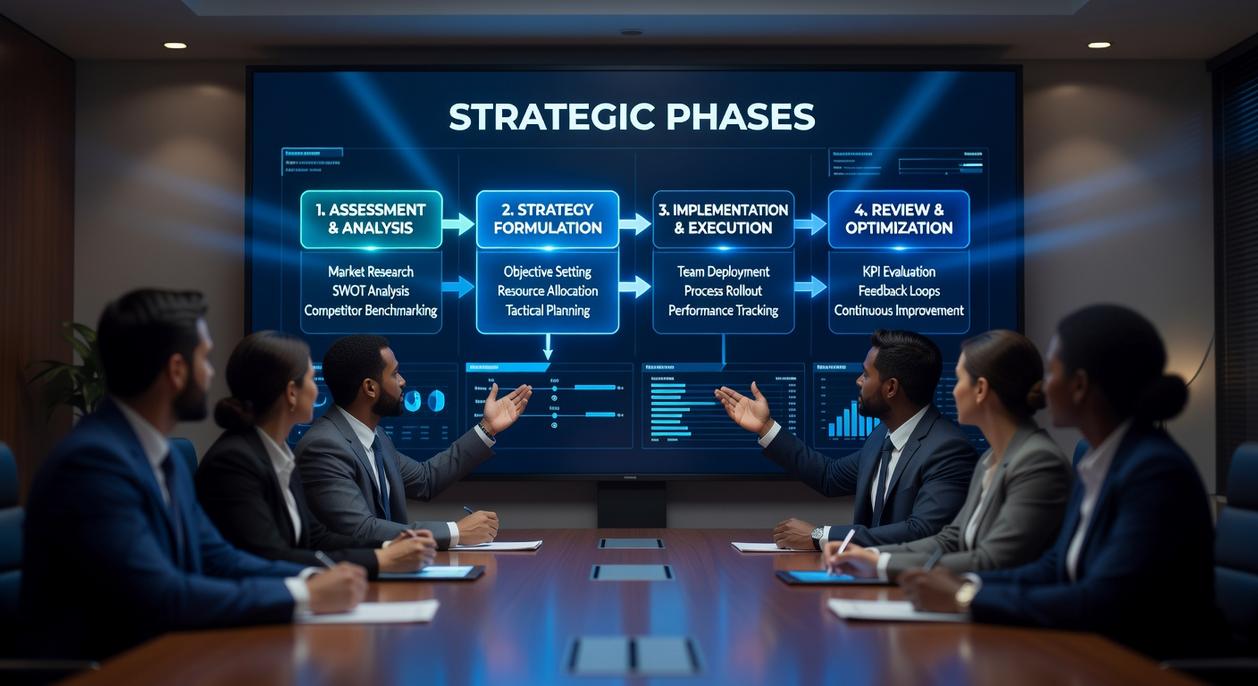
At 25+ minutes, the match stops being about farming and starts being about finishing. Gold leads mean nothing if you can’t convert them. This is where Primary Goal: Objective Control & Decisive Engagements takes over.
First, focus on macro-level map control. Split-pushing (applying pressure in a side lane while your team pressures elsewhere) forces enemies to respond, often creating uneven fights. Meanwhile, major objectives like Baron, Roshan, or Elder Dragon become game-ending buffs, not nice-to-haves. According to Riot Games’ official patch analyses, teams securing Elder Dragon win over 80% of games in coordinated play (Riot Dev Blogs). That’s not a small edge—that’s a closing argument.
Some players argue you should just group and ARAM mid to force a fight. It feels decisive. But blind grouping without vision control is gambling, not strategy. Instead, establish deep wards, push waves first, then threaten the objective. Make the enemy walk into you.
Next, team fight execution decides everything. In late game scenarios, one mistake equals a 60-second death timer (and likely your Nexus). Positioning is survival. Cooldown management means tracking enemy ultimates before committing. And target priority? Always eliminate the highest-impact threat first—usually the hyper-carry or fed mage. Think less “hit whoever’s closest” and more surgical strike (Avengers-level coordination, not solo heroics).
Finally, optimize itemization for the final push. Should you build defense or full damage? If you’re the primary carry, consider one survivability item—Guardian Angel, buyback funds, or spell shields—to avoid throwing shutdown gold. If you’re a tank, prioritize utility and peel. Pure damage can end fights faster, yes—but zero damage while dead ends nothing.
The biggest mistake players make is forgetting that early vs late game strategy shifts your win condition. Now, it’s not about scaling. It’s about execution. Choose fights wisely, secure objectives cleanly, and close with intent.
Understanding the strategic shifts between early game and late game can significantly enhance your gameplay, especially when you consider how these adjustments align with the principles of Adapting to Opponent Playstyles in Real Time.
Mastering the Meta and Winning More Matches
You came here to sharpen your edge—and now you understand how smarter rotations, tighter mechanics, optimized gear, and a refined early vs late game strategy can completely change your results. The difference between climbing and stalling often comes down to how well you adapt when the pressure spikes and the meta shifts.
Most players struggle because they react too late, build inefficiently, or misplay key power windows. That frustration of losing winnable matches? It usually traces back to small strategic gaps that compound over time.
Now you know what to adjust. Apply these tactics in your next sessions, review your gameplay with a focus on decision timing, and refine your loadouts around the current competitive meta.
If you’re serious about dominating your queue instead of grinding in place, dive deeper into our advanced guides and meta breakdowns. We’re one of the fastest-growing competitive strategy hubs for a reason—players who study, adapt, and execute with us win more. Start implementing these strategies today and turn your next match into proof.

 Ask Eddie Sanfordstirs how they got into multiplayer arena strategies and you'll probably get a longer answer than you expected. The short version: Eddie started doing it, got genuinely hooked, and at some point realized they had accumulated enough hard-won knowledge that it would be a waste not to share it. So they started writing.
What makes Eddie worth reading is that they skips the obvious stuff. Nobody needs another surface-level take on Multiplayer Arena Strategies, Controman Competitive Meta Analysis, Hot Topics in Gaming. What readers actually want is the nuance — the part that only becomes clear after you've made a few mistakes and figured out why. That's the territory Eddie operates in. The writing is direct, occasionally blunt, and always built around what's actually true rather than what sounds good in an article. They has little patience for filler, which means they's pieces tend to be denser with real information than the average post on the same subject.
Eddie doesn't write to impress anyone. They writes because they has things to say that they genuinely thinks people should hear. That motivation — basic as it sounds — produces something noticeably different from content written for clicks or word count. Readers pick up on it. The comments on Eddie's work tend to reflect that.
Ask Eddie Sanfordstirs how they got into multiplayer arena strategies and you'll probably get a longer answer than you expected. The short version: Eddie started doing it, got genuinely hooked, and at some point realized they had accumulated enough hard-won knowledge that it would be a waste not to share it. So they started writing.
What makes Eddie worth reading is that they skips the obvious stuff. Nobody needs another surface-level take on Multiplayer Arena Strategies, Controman Competitive Meta Analysis, Hot Topics in Gaming. What readers actually want is the nuance — the part that only becomes clear after you've made a few mistakes and figured out why. That's the territory Eddie operates in. The writing is direct, occasionally blunt, and always built around what's actually true rather than what sounds good in an article. They has little patience for filler, which means they's pieces tend to be denser with real information than the average post on the same subject.
Eddie doesn't write to impress anyone. They writes because they has things to say that they genuinely thinks people should hear. That motivation — basic as it sounds — produces something noticeably different from content written for clicks or word count. Readers pick up on it. The comments on Eddie's work tend to reflect that.