
Imagine launching a brand-new, graphics-heavy AAA title on a basic laptop—or even your phone—and watching it run flawlessly, with no expensive GPU in sight. For years, high-end gaming has been locked behind costly PCs and the latest consoles, forcing players to upgrade hardware just to keep up. Now, that barrier is disappearing. This article breaks down how cloud gaming technology streams games from powerful remote servers straight to your device, why it works so smoothly, and what it means for the future of gaming. If you’ve wondered how you can play without owning a powerhouse machine, here’s the answer.
Demystifying the “Game Streaming” Revolution”
At its core, cloud gaming is simple: instead of running a game on your console or PC, it runs on a powerful remote server. Think of that server as a supercomputer in a data center. Your device just streams the result.
If that sounds familiar, it should. It works like streaming a movie. You don’t download the entire film from Netflix; you receive video and audio in real time. With cloud gaming technology, the difference is interactivity. When you press a button, that input travels to the server, which instantly sends back the updated game visuals.
| Traditional Gaming | Cloud Gaming |
|---|---|
| Game runs on your hardware | Game runs on remote server |
| Requires downloads | No full downloads |
| Hardware upgrades needed | Server handles performance |
Services like GeForce Now and Xbox Cloud Gaming offer this model, but the concept matters more than the brand. As explored in how ai is transforming modern video game development, smarter infrastructure keeps pushing this shift forward.
From Data Center to Your Screen: A Look Under the Hood
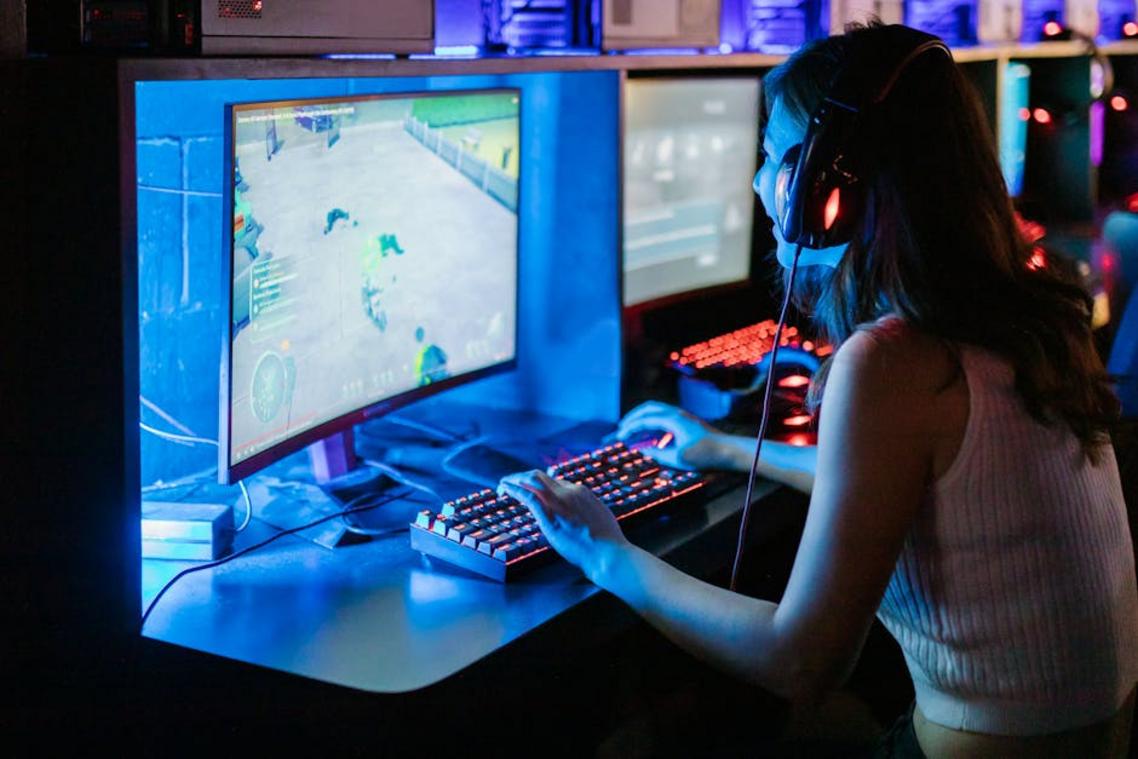
When you press “Play,” the magic doesn’t happen inside your console or PC. It happens miles away in a massive data center.
The Remote Server (The “Brain”)
These aren’t ordinary office machines humming under a desk. They’re high-performance rigs stacked with enterprise-grade GPUs (graphics processing units) and CPUs (central processing units). Think of them as maxed-out gaming PCs running at ultra settings 24/7—no overheating, no driver drama (we’ve all been there).
For you, the benefit is simple: no expensive hardware upgrades. The heavy lifting happens remotely, meaning even a modest laptop, tablet, or smart TV can run visually demanding titles.
Video Encoding & Streaming
Once the game renders on that remote machine, the server captures each frame in real time. It then compresses the footage using codecs like H.264 or H.265—algorithms that shrink video data while preserving clarity. (A codec is just a tool that “codes” and “decodes” video for efficient delivery.)
That compressed stream travels across the internet to your screen almost instantly. This is the backbone of cloud gaming technology.
What’s in it for you?
- Instant access to high-end visuals without downloads or installs
No patches. No 100GB updates eating your storage. Just click and play.
Input & Latency (The Biggest Challenge)
Now for the tricky part. When you press a button, your input travels back to the server. The server processes it, updates the game, re-encodes the video, and streams the new frame back.
The delay between your action and what you see is called latency. Even a split-second lag can mean missing a headshot or mistiming a dodge. Minimizing latency is the single biggest technical hurdle.
The payoff? When latency is low, you get smooth, responsive gameplay—competitive performance without owning a powerhouse machine. And that’s a win, especially in fast-paced multiplayer arenas where every millisecond counts.
The Trade-Offs: Is Cloud Gaming Right for You?
Cloud gaming feels a bit like streaming a blockbuster instead of buying the Blu-ray. You press play, and within seconds the screen glows, menus hum softly through your speakers, and you’re sprinting across a battlefield—no whirring console fan, no massive download bar crawling forward.
The Advantages (The “Pros”)
- Accessibility: With cloud gaming technology, you can run demanding titles on a basic laptop, tablet, or even a smart TV. The experience looks surprisingly crisp, colors popping against the glass of your screen.
- Cost-Effectiveness: No $500 console. No frantic GPU hunt. For many players, skipping the upgrade treadmill is a financial relief (your wallet can finally exhale).
- Convenience: Click and play. No patches. No installs. It’s gaming that feels frictionless—like flipping on Netflix after a long day.
But not everyone’s convinced.
Critics argue that nothing replaces native hardware—and they have a point.
The Disadvantages (The “Cons”)
- Internet Dependency: If your connection stutters, so does your game. Lag can feel like running through syrup, inputs arriving a split second too late. According to the FCC, latency and broadband consistency vary widely by region, impacting real-time services (FCC Broadband Reports).
- Visual Fidelity: Compression can soften textures. In darker scenes, you might notice faint artifacts—like smudges on an otherwise sharp painting.
- Input Lag: Competitive players may sense that tiny delay between button press and on-screen action. In fast shooters or fighting games, milliseconds matter.
So is it worth it? If you value flexibility and ease, absolutely. If you chase peak performance, local hardware still reigns—for now.
The next level of cloud gaming technology hinges on 5G’s ultra-low latency, cutting response times to near-console speeds on mobile. That means competitive shooters on a train without rage-inducing lag (yes, really). But bandwidth alone isn’t the edge. AI-driven predictive rendering—systems that anticipate player inputs before they happen—plus edge computing nodes closer to users shrink delays further. Competitors talk speed; they ignore infrastructure economics and regional rollout gaps. We analyze both. Expect seamless integration into smart TVs, browsers, and dashboards, where play is as instant as Netflix. Accessibility becomes the battleground, not hardware. Ownership models will quietly redefine competition worldwide.
As players navigate the evolving landscape of cloud gaming, mastering foundational skills like positioning and map awareness becomes even more crucial for enhancing their gameplay experience – for more details, check out our Positioning and Map Awareness: Foundational Skills Explained.
Your Games, Anywhere: The New Reality of Digital Play
High-end gaming is no longer reserved for those with cutting-edge hardware. cloud gaming technology is redefining access by shifting the heavy lifting to remote servers, letting players stream immersive, graphics-rich experiences on everyday devices. The barrier to entry is falling, opening the door to more gamers than ever before.
Of course, this freedom comes with a trade-off: performance hinges on a fast, stable internet connection. Without it, even the best titles can’t shine.
As global internet infrastructure continues to improve, this model is set to dominate the industry—ushering in a new era where your games truly go wherever you do.

 Rendric Vossric writes the kind of multiplayer arena strategies content that people actually send to each other. Not because it's flashy or controversial, but because it's the sort of thing where you read it and immediately think of three people who need to see it. Rendric has a talent for identifying the questions that a lot of people have but haven't quite figured out how to articulate yet — and then answering them properly.
They covers a lot of ground: Multiplayer Arena Strategies, Gaming Gear Optimization Tips, Pro Insights, and plenty of adjacent territory that doesn't always get treated with the same seriousness. The consistency across all of it is a certain kind of respect for the reader. Rendric doesn't assume people are stupid, and they doesn't assume they know everything either. They writes for someone who is genuinely trying to figure something out — because that's usually who's actually reading. That assumption shapes everything from how they structures an explanation to how much background they includes before getting to the point.
Beyond the practical stuff, there's something in Rendric's writing that reflects a real investment in the subject — not performed enthusiasm, but the kind of sustained interest that produces insight over time. They has been paying attention to multiplayer arena strategies long enough that they notices things a more casual observer would miss. That depth shows up in the work in ways that are hard to fake.
Rendric Vossric writes the kind of multiplayer arena strategies content that people actually send to each other. Not because it's flashy or controversial, but because it's the sort of thing where you read it and immediately think of three people who need to see it. Rendric has a talent for identifying the questions that a lot of people have but haven't quite figured out how to articulate yet — and then answering them properly.
They covers a lot of ground: Multiplayer Arena Strategies, Gaming Gear Optimization Tips, Pro Insights, and plenty of adjacent territory that doesn't always get treated with the same seriousness. The consistency across all of it is a certain kind of respect for the reader. Rendric doesn't assume people are stupid, and they doesn't assume they know everything either. They writes for someone who is genuinely trying to figure something out — because that's usually who's actually reading. That assumption shapes everything from how they structures an explanation to how much background they includes before getting to the point.
Beyond the practical stuff, there's something in Rendric's writing that reflects a real investment in the subject — not performed enthusiasm, but the kind of sustained interest that produces insight over time. They has been paying attention to multiplayer arena strategies long enough that they notices things a more casual observer would miss. That depth shows up in the work in ways that are hard to fake.